
 The CASE Approach - an evidence based intervention -
is listed on the federal Suicide Prevention Resource Center's "Best Practices Registry (BPR)" for recommended use across the United States
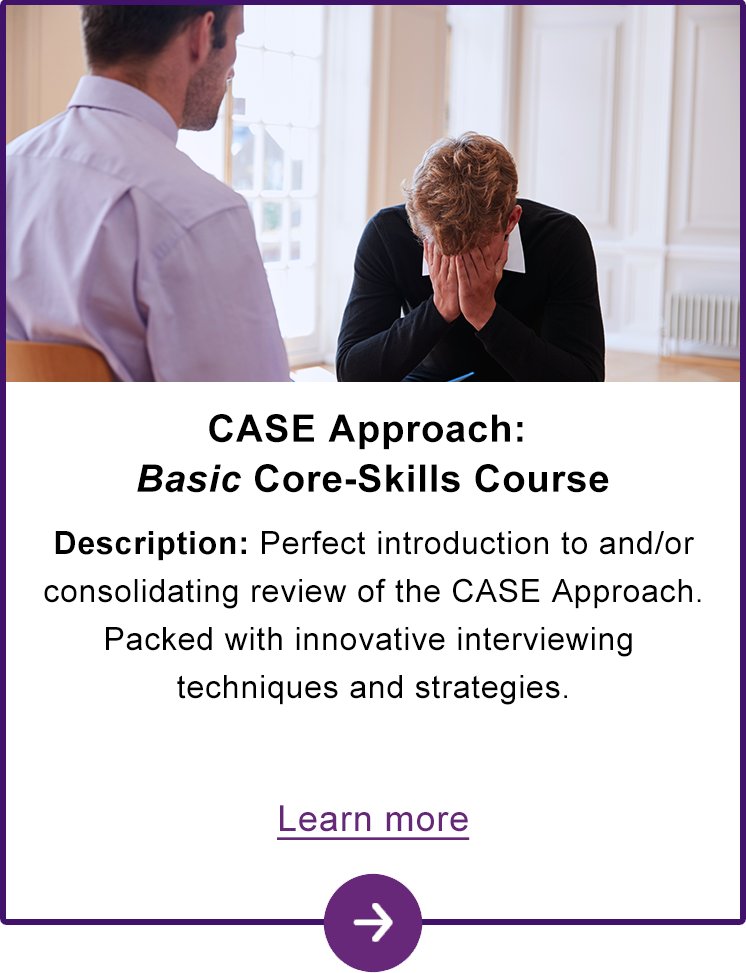
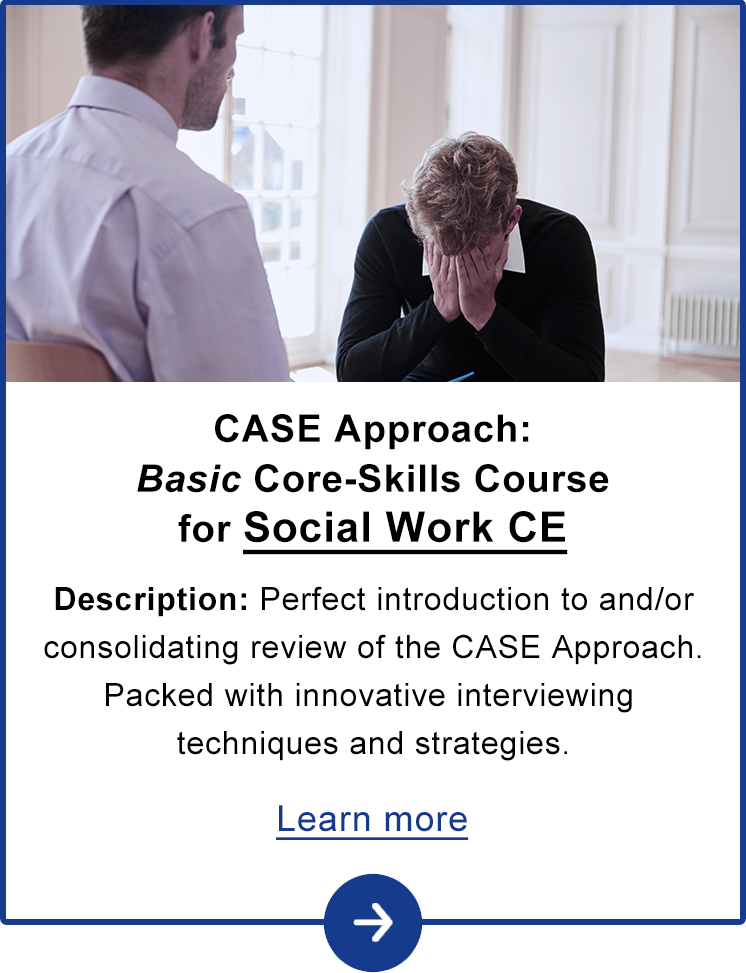
Advanced Core-Skills Courses: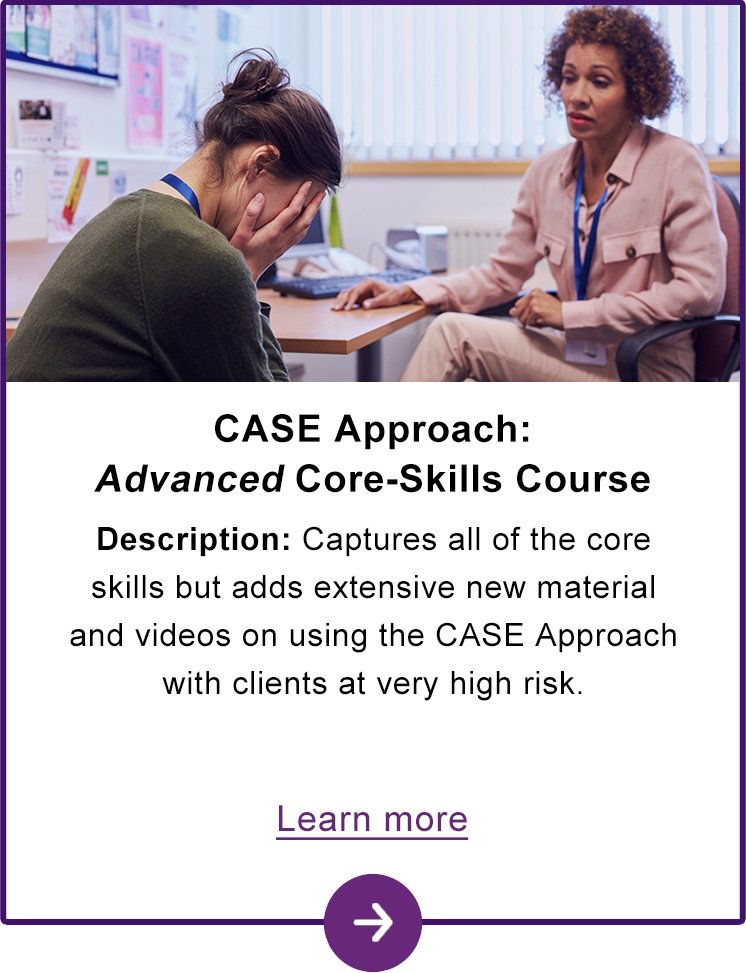
The CASE Approach is an easily learned interviewing strategy for uncovering suicidal ideation, planning, behaviors and intent. When using the CASE Approach, clinicians flexibly interweave innovative techniques from the field of clinical interviewing - known as Validity Techniques- 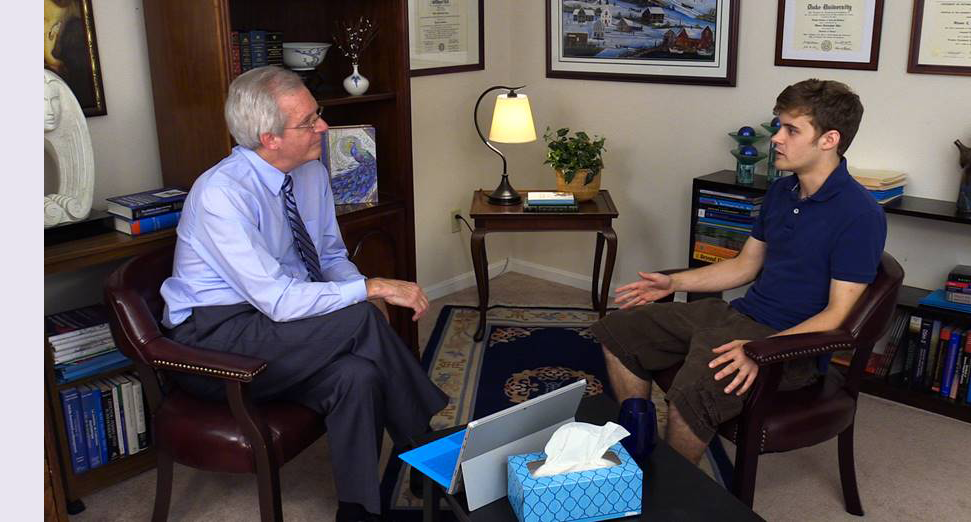 to decrease errors of omission, increase the client’s sense of safety when sharing suicidal thought, and to increase the validity of their self-reporting. These attributes allow the clinician to flexibly adapt their interviewing style to meet the unique needs of each client while sensitively uncovering a client’s potentially hidden method of choice for suicide (MOC), extent of actions taken using their MOC, and immediate intentions to use the MOC to proceed with suicide in clients at immediate risk (next 24 hours) or imminent risk (next 7 days).
Unlike semi-structured formats clinicians never use cue sheets – or record information – while asking the questions used in the CASE Approach. This focused sensitivity upon the client allo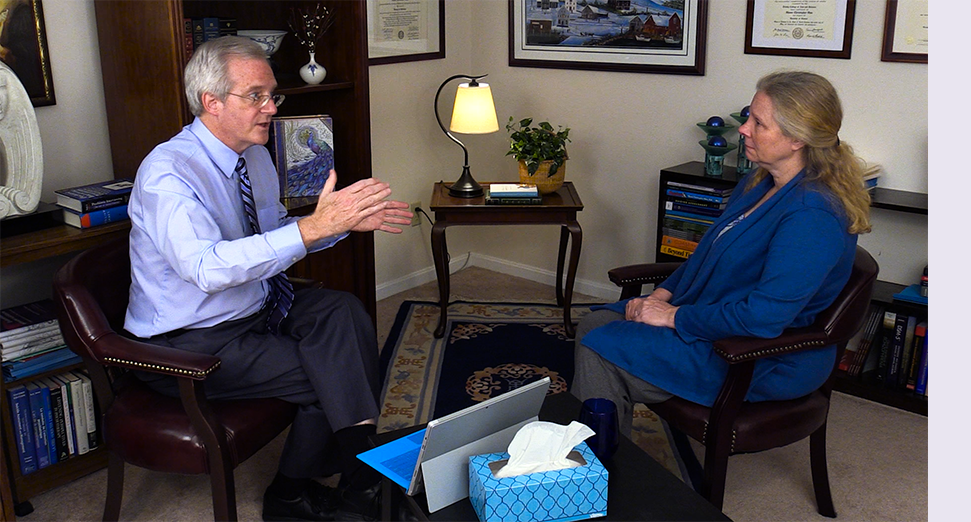 ws clinicians to provide 100% of their attention to engaging the client and looking for nonverbal indicators of withheld secrets - secrets that can sometimes prove to be of life-saving importance. Both the evidence-based CASE Approach and the CASE Approach Online Courses are listed on the federal Suicide Prevention Resource Center’s Best Practices Registry (BPR) for recommended use across the Unites States.
“I believe that the CASE Approach is a remarkable conceptual and clinical contribution to the field of suicidology. It should be routinely taught to any front-line clinician. It has the power to meaningfully save lives.”
David A. Jobes, PhD
Author, Managing Suicidal Risk: A Collaborative Approach, 3rd Ed.
from his Preface to Dr. Shea’s book
The Practical Art of Suicide Assessment
"If all mental health providers were trained in the CASE Approach, I believe that thousands of lives would be saved a year. And I’m not exaggerating, I believe this in my very core. A triumph of innovation. A great gift to the field of suicide prevention."
Skip Simpson, JD
Practice Limited to Psychiatric and Psychological Malpractice
“Dr. Shea is an extremely gifted teacher, whose vibrant story-telling skills and compelling videos have led him to garnering some of the highest evaluations in the 30-year history of the Cape Cod Symposium. In short, viewers are in for a rare treat.”
Rob Guerette, MD
Founder and Director of the Cape Cod Symposium
Typical Course Video Sample
Course Designer and Instructor
Shawn Christopher Shea, MD - the creator of the CASE Approach - is the director of the Training Institute for Suicide Assessment and Clinical Interviewing (TISA). Dr. Shea is an innovator, author, and speaker in the fields of suicide prevention, clinical interviewing, and creating the therapeutic alliance. He has presented over 850 presentations in the United States and - internationally - from Canada and Europe to Australia and New Zealand.
Dr. Shea has written eight books and numerous articles. His book The Practical Art of Suicide Assessment: A Guide for Mental Health Professionals and Substance Abuse Counselors is viewed as a classic in the field of suicide prevention. His text Psychiatric Interviewing: The Art of Understanding - A Practical Guide for Psychiatrists, Psychologists, Counselors, Social Workers, Nurses, and Other Mental Health Professionals, 3rd Edition was chosen by the British Medical Association as the 2017 Book of the Year in Psychiatry.
Dr. Shea has presented an updated half-day course on the CASE Approach for 22 years at the Annual Meeting of the American Association of Suicidology.

"Suicide Prevention through Sound Suicide Assessment"
FAQs
-
Can the CASE Approach be used in teletherapy?
Absolutely. It is perfectly designed for teletherapy, meeting a great need in the aftermath of the COVID-19 pandemic. Indeed, it is also very effective for telephone interventions as is often seen with suicide prevention crisis lines.
-
Our organization is implementing a Zero Suicide Approach. Will training in the CASE Approach meet our needs?
The CASE Approach resonates nicely with the Zero Suicide Initiative as reflected by various trainings on the CASE Approach - provided by Dr. Shea - having been listed on the Zero Suicide’s Care Training Options List for years. Both the CASE Approach and the CASE Approach Online Courses have been placed on the Best Practices Registry (BPR) of the Suicide Prevention Resource Center (SPRC).
-
Does this course provide CEs or CMEs?
TISA is an accredited provider of ASWB ACE Social Work CEs in the United States and Canada. Note, participants should check directly with their own local regulatory board to see if they accept ACE CEs. CEs will only be granted to those purchasing the CE version of our course.
TISA does not provide CEs for other mental health disciplines and does not provide CNEs or CMEs.
All students who complete the online course may download a certificate of completion. -
For what age groups is the CASE Approach designed?
The CASE Approach is specifically designed for use with adolescents and adults of all ages. It is not designed nor recommended for use with children.
On the other hand, the validity techniques utilized in the CASE Approach (as are well-described in both courses) are excellent for use with the parents of children to uncover secrets such as child abuse and neglect, problematic alcohol and/or substance use, or other parental behaviors that can damage children or thwart therapy.
-
In what clinical settings is the CASE Approach of use?
The CASE Approach is used in essentially all clinical settings including community mental health centers, inpatient units, university counseling centers, high schools, private practices, correctional facilities, military bases and VAs, Native American counseling centers, emergency departments, telephone crisis centers, and primary care clinics and general hospitals.
-
Can the CASE Approach be used in differing cultures and populations?
The CASE Approach has been used across numerous cultures, ethnic groups, races, and sexes including populations - such as the LGBTQ+ community - that cross all ethnicities and races.
If you are in crisis, you can find help at the
Lifeline Chat Room 988lifeline.org or call or text 988.